



Behind the Research: From Digital Vaccination Records to TBE Prevention
Vaccination research goes far beyond studying vaccines themselves. It also looks at why people choose to vaccinate, how vaccination records can be improved, and how diseases can ultimately be better prevented. We spoke with Dr. Phung Lang, MPH and PD Dr. Kyra Zens, MPH, from the Immunity and Vaccines research group at the Epidemiology, Biostatistics and Prevention Institute (EBPI) about their current projects and the questions driving their research.
Behind the Research: From Digital Vaccination Records to TBE Prevention
Vaccination research goes far beyond studying vaccines themselves. It also looks at why people choose to vaccinate, how vaccination records can be improved, and how diseases can ultimately be better prevented. We spoke with Dr. Phung Lang, MPH and PD Dr. Kyra Zens, MPH, from the Immunity and Vaccines research group at the Epidemiology, Biostatistics and Prevention Institute (EBPI) about their current projects and the questions driving their research.

Phung Lang is a research scientist at the Institute of Epidemiology, Biostatistics and Prevention (EBPI) at the University of Zurich. Her research focuses mainly on vaccination coverage, the epidemiology of vaccination and its impact on infectious diseases and factors affecting vaccination uptake in the population.
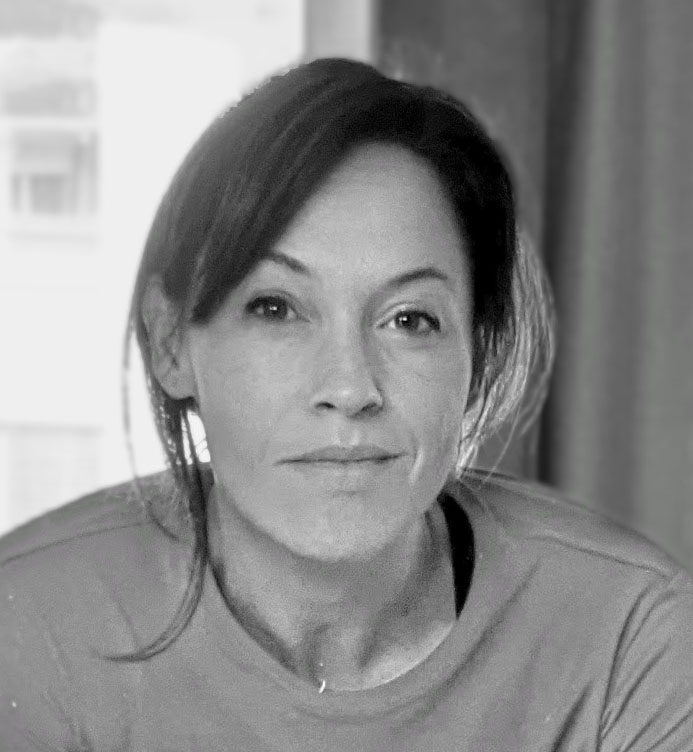
Kyra Zens is a senior researcher and co-group leader of the Immunity and Vaccines research group at the Institute of Epidemiology, Biostatistics and Prevention (EBPI) at the University of Zurich. Her research focuses on vaccine-preventable diseases and vaccine-mediated protection, combining immunological and epidemiological approaches to study vaccination uptake, vaccine effectiveness and immunity, with a particular focus on tick-borne encephalitis (TBE).
20 August, 2026
Share post
#Interview #Research
Thank you so much for taking the time to speak with us again!
Some of our readers may remember our previous interviews with you: Phung, about the Swiss National Vaccination Coverage Survey, and Kyra, about your research on tick-borne encephalitis (TBE). We are very happy to welcome you back!
This time, we'd like to shift the focus slightly. Rather than talking about a single project, we'd love to introduce the research group behind these exciting studies. From digital vaccination records and TBE research to HPV elimination and MMR immunity, your team is involved in a wide range of projects that all contribute to improving vaccination and public health in Switzerland. We'd love to learn more about the people behind this work and the ideas driving it.
We've spoken to both of you individually before, but not yet about the research group itself. Could you tell us a little about your team at the Institute of Epidemiology, Biostatistics and Prevention (EBPI) and what brings your different research projects together?
Our group, Immunity and Vaccines, focuses on combing expertise in the fields of epidemiology, immunology and public health. Our intradisciplinary approach is one of our greatest strengths. Depending on the project, we also partner with clinicians, behavioral scientists, computer engineers and other basic scientists, bringing together a wide range of expertise to help address complex public health questions.
Although our research covers diverse topics such as vaccination coverage, behavioral research, digital health tools, TBE, HPV and MMR, all of our work has a shared goal: to improve health through vaccination. Some projects focus, for example, on understanding why people and healthcare workers make vaccination decisions, others on determining vaccine effectiveness, and still others on how digital technologies can support healthcare. Together, though, the projects contribute to generating the evidence needed to improve vaccination programs, inform public health policy, and ultimately better protect the population in Switzerland.
Your work spans everything from vaccination coverage and behavioral research to digital health tools and clinical studies. Has the focus of your research evolved over the past few years?
Absolutely. Initially, our work focused on understanding vaccination coverage in Switzerland through projects such as the Swiss National Vaccination Coverage Survey. While this remains an important part of of our work, our research has become much broader.
Today, we're not only asking who is vaccinated, but also why people choose to vaccinate, or not, and how healthcare systems can better support those decisions. This has led us to study knowledge, attitudes and behaviors surrounding vaccination. We are also involved in digital innovation projects that aim to improve vaccination management.
Another important development is that we increasingly work across diseases rather than focusing on individual vaccines. Whether we're studying TBE, HPV or MMR, the underlying questions are often similar: how can we improve vaccination uptake, what do we know about vaccine-mediated immunity, and how can we provide better evidence for public health decision-making?
One of your newest projects aims to digitise vaccination records through a new app. What inspired this project, and how do you hope it will improve vaccination management for families and healthcare professionals?
The project, which is funded by the DIZH and PRC, stemmed from a very practical problem. In Switzerland, many vaccination records are still handwritten and paper-based. They're valuable documents, but they can easily be lost or damaged. Furthermore, because they exist in many different formats and are handwritten, they are difficult to integrate into digital healthcare systems.
Our goal is to develop an AI-supported application that can quickly and accurately scan handwritten Swiss vaccination cards and convert them into standardized digital vaccination records that comply with Swiss healthcare standards. Instead of simply storing an image or PDF, the vaccination information becomes machine-readable and can be securely integrated into electronic health systems.
This could significantly reduce the time healthcare professionals spend manually reviewing vaccination cards while improving data quality. It also opens new opportunities for real-time vaccination surveillance and better public health monitoring. Looking ahead, we also hope to integrate decision-support functions that compare a person's vaccination history with the recommended Swiss vaccination schedule and identify any catch-up vaccinations that may be needed.
For families, the long-term vision is simple: vaccination records that are easier to access, less likely to be lost, and always available whenever they are needed.
Tick-borne encephalitis (TBE) has been one of your long-standing research interests. Since we last spoke with Kyra, you've completed a new study looking at parents' and pediatricians' knowledge, attitudes and behaviour regarding TBE vaccination. Could you tell us what you investigated, and perhaps share a first glimpse of what you found?
Our previous work showed that TBE vaccination coverage in Switzerland could be improved, but it also raised an important question: why do some families choose to vaccinate their children while others do not? This new study was designed to investigate this by examining both parents' and pediatricians' perspectives.
We surveyed over 600 parents and almost 100 pediatricians in the Canton of Zurich, examining their knowledge, attitudes and behaviors relating to TBE vaccination for children. One of the most interesting findings was that parents are far from a homogeneous group. Using clustering analyses, we identified four distinct parental profiles with very different vaccination rates.
Two of these groups had very high childhood vaccination uptake—over 90%—while the other two had substantially lower uptake. Importantly, the reasons differed between them. One group mainly lacked awareness and felt uncertain about TBE and the vaccine. In contrast, another group was well informed but perceived TBE as less of a risk and considered vaccination less important.
We also found that parents who were vaccinated themselves were much more likely to have vaccinated their children. Information from pediatricians or other healthcare providers was associated with higher vaccination uptake, whereas relying on social media or reporting having no information source, was associated with lower uptake.
Overall, the study suggests that improving vaccination uptake is just not a matter of addressing "hesitancy." Different families have different concerns, so communication should be tailored to their specific needs. The study also reinforces the important role healthcare professionals play in providing trusted, evidence-based information.
Your research also extends to HPV and MMR (measles, mumps, rubella). Could you tell us a little about these projects and why they are important from a public health perspective?
HPV is a great example of how vaccination research can contribute to disease elimination rather than simply disease control. Today, we know that more than 90% of cervical cancers are preventable through vaccination, screening and timely treatment. However, HPV also causes several other cancers, including anal, penile, vulvar, vaginal and oropharyngeal cancers.
Our current work aims to support a national HPV elimination strategy for Switzerland. We are bringing together information on vaccination coverage, disease burden, screening, healthcare utilisation and policy through a new platform called SPHERE—the Swiss Platform for HPV Evaluation and REsponse. The idea is to provide researchers, clinicians and policymakers with the evidence they need to guide future public health action.
At the same time, we are studying the behavioral factors1 that influence HPV vaccine uptake and working with stakeholders across Switzerland to identify priorities for improving vaccination coverage and reducing inequalities between cantons.
Our MMR research addresses another important challenge. Although measles is vaccine-preventable, maintaining Switzerland’s elimination status requires very high levels of immunity across the population. By studying immunity and vaccination coverage, we can identify vulnerable groups and generate evidence to support outbreak prevention and long-term disease elimination.
For both projects, however, our underlying goal remains the same: to provide evidence to support vaccination programs and reduce the burden of vaccine-preventable diseases.
Looking across all these different projects, is there a common message you hope parents, healthcare professionals and the public take away about vaccination?
Across all of our projects, the common theme is that good vaccination decisions depend on good information. Whether we're developing digital vaccination records, studying vaccination behaviors, monitoring vaccination coverage, or investigating vaccine-mediated immunity, our goal is to generate evidence that helps individuals, healthcare professionals, policymakers, and public health authorities make informed decisions.
Our research also shows that vaccination decisions are rarely driven by a single factor. They are shaped by knowledge, trust, personal experiences, access to healthcare, and conversations with healthcare professionals. Effective vaccination programs therefore require not only strong scientific evidence, but also clear communication, accessible healthcare services, and modern digital tools.
Thank you both very much for this insightful interview!
Interview: Sofia Ricar
1 Zens K, Baer N, Nur S, Renner S, Lang P. Knowledge, Attitudes, and Behaviors Toward Human Papillomavirus Vaccination Among Adults in Switzerland. JAMA Netw Open. 2026;9(3):e262780. doi:10.1001/jamanetworkopen.2026.2780
Phung Lang is a research scientist at the Institute of Epidemiology, Biostatistics and Prevention (EBPI) at the University of Zurich. Her research focuses mainly on vaccination coverage, the epidemiology of vaccination and its impact on infectious diseases and factors affecting vaccination uptake in the population.
Kyra Zens is a senior researcher and co-group leader of the Immunity and Vaccines research group at the Institute of Epidemiology, Biostatistics and Prevention (EBPI) at the University of Zurich. Her research focuses on vaccine-preventable diseases and vaccine-mediated protection, combining immunological and epidemiological approaches to study vaccination uptake, vaccine effectiveness and immunity, with a particular focus on tick-borne encephalitis (TBE).
20 August, 2026
Share post
#Interview #Research