



.png)

As a clinic for travel medicine, we are regularly asked which hepatitis vaccinations are advisable before a trip and what travelers can do to protect themselves. “Hepatitis” is an umbrella term for inflammation of the liver caused by a wide variety of factors. Among infectious forms of liver inflammation, hepatitis viruses A, B, C, and E are the most common pathogens. They differ primarily in how they are transmitted, their symptoms, and the course of the disease. While hepatitis A and E cause acute¹ hepatitis, hepatitis B and C are more likely to become chronic. This is precisely why it is important for travelers to understand the differences among the four types.
¹ sudden in onset and usually short-lived
What Is Hepatitis?
The liver is one of our most important organs. It removes toxins from the body, aids digestion, and performs numerous metabolic functions. Hepatitis is an inflammation of the liver and can significantly impair the organ’s ability to function. Globally, hepatitis is most commonly caused by viruses, and each type has its own characteristics.
Some infections are mild and resolve on their own. In rare cases, however, they can cause severe illness with acute liver failure. Other infections may become chronic and cause serious long-term liver damage.
The good news is that effective vaccines are available against hepatitis A and B. Medications are also available for hepatitis B and C and can effectively combat the virus in the vast majority of cases. A vaccine against hepatitis E is not currently available in Switzerland, and treatment is generally limited to managing symptoms during the acute illness.
Hepatitis A: An Unwanted Travel Souvenir
Hepatitis A is transmitted by the fecal–oral route—that is, through contaminated drinking water, ice cubes, inadequately cooked food, seafood, or unpeeled fruit. The virus is found primarily in regions with limited sanitation, including large parts of Asia, Africa, Central and South America, and Eastern Europe. It is therefore considered a classic travel-related infection.
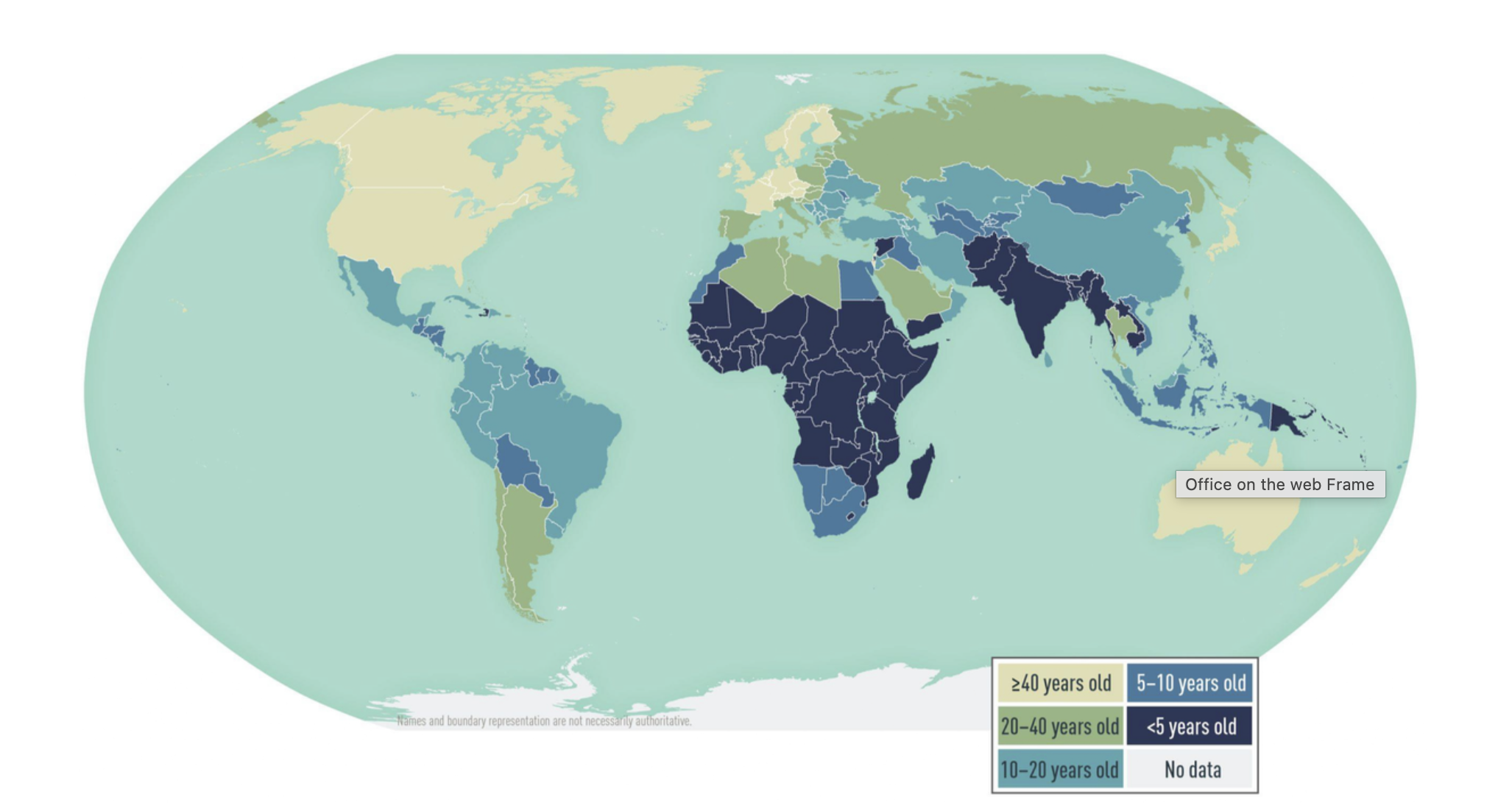
Map 1: Prevalence of hepatitis A in the population. The map shows the estimated age by which half of a country’s population has had a hepatitis A infection and is therefore immune. (Source: U.S. Centers for Disease Control and Prevention, CDC, 2015)
Hepatitis A is often mild in children. In adults, however, it may cause loss of appetite, nausea, fever, jaundice, and severe fatigue that can persist for weeks or months. There is no specific treatment; only the symptoms can be relieved. After recovering from hepatitis A, a person has lifelong immunity.
A well-tolerated vaccine provides protection against hepatitis A. Even the first dose offers good protection for travel. A second dose administered six to twelve months later provides long-lasting—and likely lifelong—protection. Vaccinated travelers should still follow the precautions recommended for preventing travelers’ diarrhea: “Cook it, boil it, peel it, or leave it.” In other words, eat only thoroughly cooked food, peel fruit yourself, and make sure your drinking water is safe.
Hepatitis B: Transmission Through Blood and Other Body Fluids
Hepatitis B is transmitted through blood and other body fluids. Possible routes of transmission include unprotected sex; medical or dental procedures involving contaminated instruments; tattoos and piercings performed under unhygienic conditions; sharing razors, toothbrushes, or nail scissors; and transmission from mother to child, usually during childbirth. The virus occurs almost worldwide, although it is considerably more common in some regions than in others.
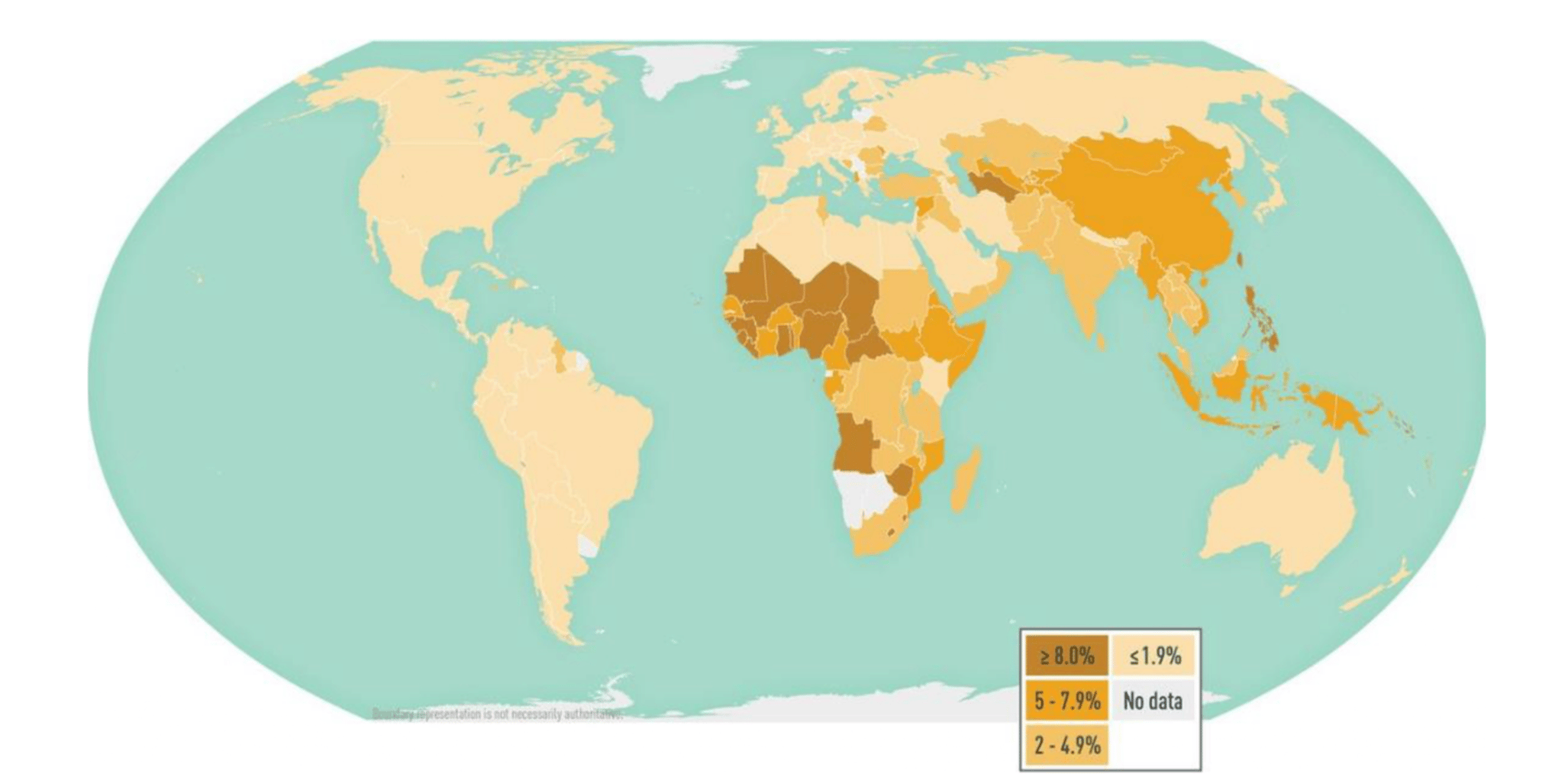
Map 2: Prevalence of hepatitis B in the population. The map shows the estimated proportion of the population with hepatitis B infection. Darker shades indicate a higher prevalence. (Source: CDC; data as of 2023)
Hepatitis B can be acute, meaning that it appears suddenly and resolves on its own, but it can also become chronic. Chronic infections are particularly concerning because they may lead to cirrhosis² or liver cancer over the course of many years—often without the affected person initially noticing anything. Antiviral medications usually do not cure the infection, but they significantly reduce the amount of virus in the body and help prevent the liver disease from progressing.
Here, too, vaccination is the most effective form of protection. In Switzerland, hepatitis B vaccination is now one of the recommended routine vaccinations and is given to infants as part of a combination vaccine. Many younger adults are therefore already protected against the disease. Anyone who has not been vaccinated or has received only some of the required doses can complete the vaccination series. Adults generally need three doses administered over several months. Travelers can also receive a convenient combination vaccine that protects against both hepatitis A and hepatitis B.
² progressive scarring of the liver in which healthy liver tissue is replaced by scar tissue, increasingly preventing the liver from functioning properly
Hepatitis C: No Vaccine, but Treatable
Hepatitis C is transmitted almost exclusively through blood. The main travel-related risks include medical procedures performed with unsterile equipment, tattoos or piercings performed with nonsterile materials, and shared items that may have come into contact with blood, such as needles and other sharp instruments. Sexual transmission and transmission during childbirth are possible but much less common.
Unlike hepatitis A and B, there is currently no vaccine against hepatitis C. Most acute infections do not cause clearly recognizable symptoms and therefore often go unnoticed. The infection frequently becomes chronic. The important good news is that direct-acting antiviral medications have been available for several years and lead to a complete cure in the vast majority of cases.
Because no vaccine is available, preventing hepatitis C primarily means avoiding contact with blood. Avoid medical or cosmetic procedures performed under questionable hygienic conditions. Do not share razors, toothbrushes, or manicure tools, and consistently avoid situations in which nonsterile equipment may be used. Practicing safer sex is also recommended to reduce the risk of transmission as much as possible.
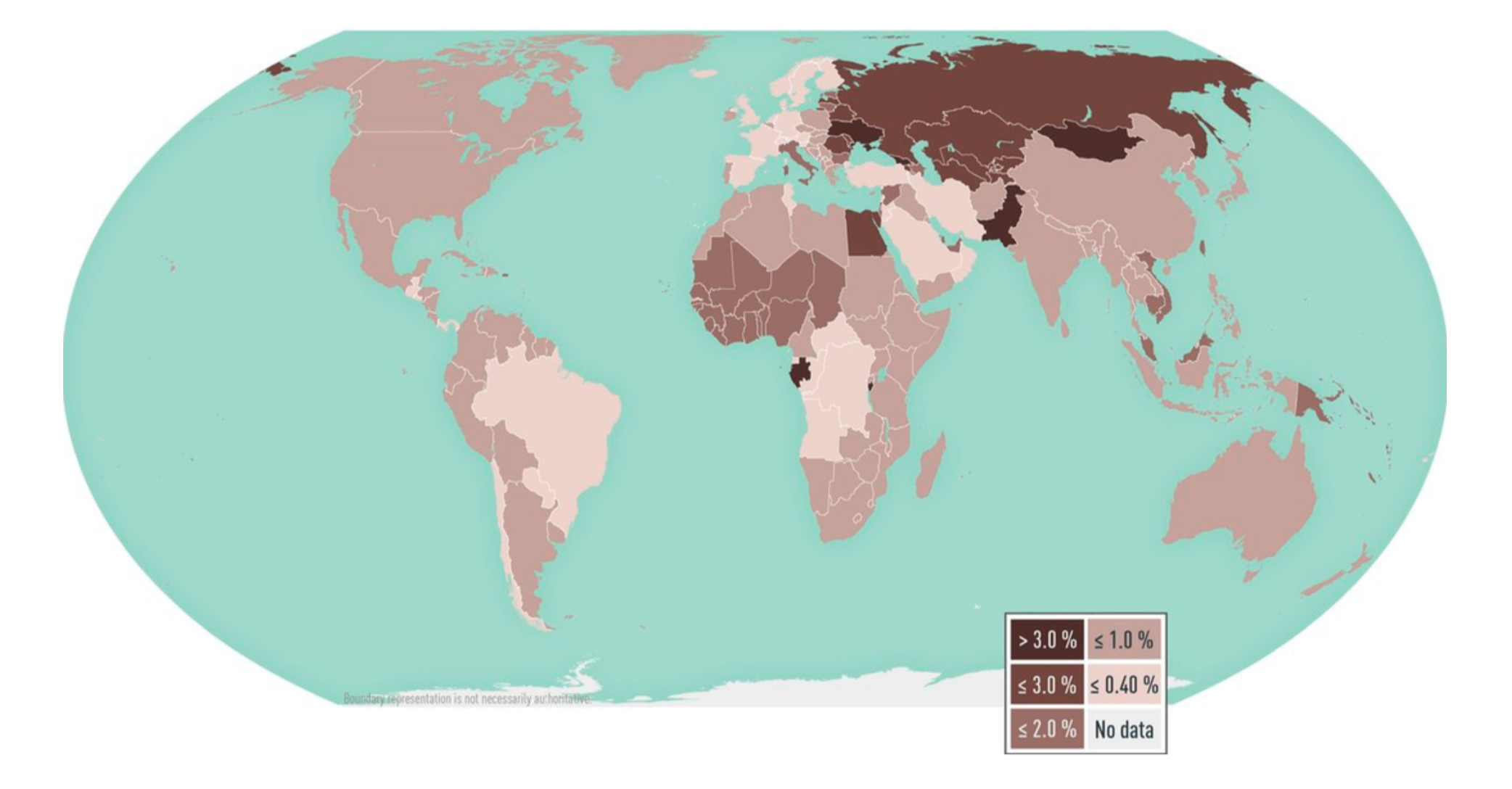
Map 3: Prevalence of hepatitis C in the population. The map shows the estimated proportion of the population with an active hepatitis C infection. Darker shades indicate a higher prevalence. (Source: CDC; data as of 2019)
Hepatitis E: Why Good Hygiene Is the Best Protection
Hepatitis E is primarily contracted through contaminated water and food and is one of the most common causes of acute viral hepatitis worldwide. How the virus is transmitted depends on its genotype. In regions with limited access to clean water, infection generally occurs through the fecal–oral route via contaminated drinking water. In areas with better sanitation, however, hepatitis E is usually a zoonotic disease³ and is most often transmitted through raw or inadequately cooked pork or game meat. For travelers, therefore, it is important to consider not only where they are traveling but also what ends up on their plate.
³ Infectious diseases that can be transmitted between animals and humans.
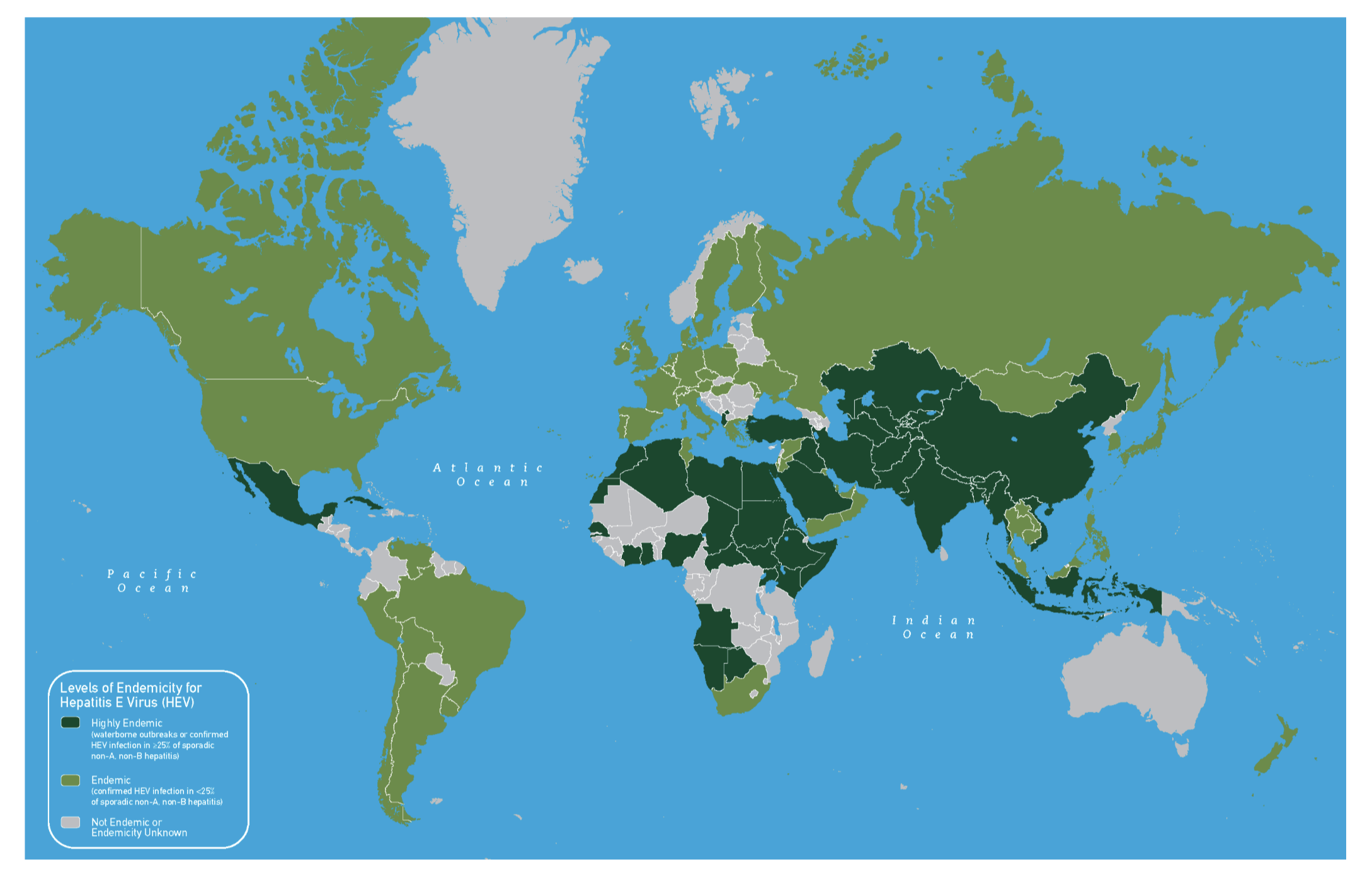
Map 4: Prevalence of hepatitis E in the population. The map distinguishes among regions with unknown or no occurrence (gray), low occurrence (light green), and elevated occurrence (dark green). (Source: CDC; data as of 2012)
Many infections are mild or go unnoticed and resolve on their own in healthy adults. However, hepatitis E can be dangerous for certain groups. In pregnant women, the infection may be severe and, depending on the genotype, is associated with a mortality rate of up to 25%. In people with weakened immune systems, the infection may become chronic. In people with existing liver disease, it may cause an acute deterioration in liver function.
A hepatitis E vaccine has so far been approved only in China and Pakistan and is not available in Switzerland. As with hepatitis A, protection while traveling therefore depends primarily on careful food and drinking-water hygiene: Follow the rule “Cook it, boil it, peel it, or leave it,” avoid ice cubes and tap water, and eat meat only if it has been thoroughly cooked. There is no specific treatment; care is generally supportive.
Why Hepatitis Is Particularly Relevant to Travelers
Things can be different when you are traveling than they are at home. People visiting countries with limited sanitation or different health care standards are more likely to come into contact with contaminated water or nonsterile instruments. A scooter accident, an unexpected dental problem, or the need for local medical treatment can suddenly create a risk of infection. A spontaneous vacation tattoo or piercing performed without considering hygiene can also have unpleasant consequences. The relaxed atmosphere of a vacation and new acquaintances may also lead to sexual encounters during which hepatitis viruses can be transmitted.
In addition, many hepatitis infections initially cause no symptoms or only nonspecific symptoms. An infection may therefore remain undetected for a long time—sometimes symptoms do not appear until after the traveler returns home or even years later. Precisely because the symptoms can be nonspecific, prevention is especially important.
How to Protect Yourself
The best protection begins before departure. The following measures can help keep your risk low:
- Review and update your vaccinations: Find out well in advance whether you are protected against hepatitis A and B. A combination vaccine that protects against both diseases is also available. Because full protection requires several doses over a period of time, it is advisable to plan ahead. Accelerated vaccination schedules may be possible in certain situations—discuss this with our travel medicine specialists.
- Be careful about food and beverages: Follow the rule “Cook it, boil it, peel it, or leave it,” avoid ice cubes, and drink water from sealed bottles. Freshly squeezed fruit juices and inadequately cooked meat may also pose a risk. These precautions can protect you against hepatitis A and E, travelers’ diarrhea, and other unwanted travel souvenirs.
- Avoid contact with blood: Avoid tattoos, piercings, dental procedures, or cosmetic treatments performed under questionable hygienic conditions. Do not share razors, toothbrushes, needles, syringes, or manicure tools.
- Practice safer sex: Condoms reduce the risk of transmission of hepatitis B, hepatitis C, and other sexually transmitted infections.
- Be prepared for emergencies: Before your trip, find out where you can obtain reliable medical care if necessary. Make sure that only sterile equipment is used during any procedures.
Travel Well Prepared
Hepatitis A, B, C, and E all affect the liver, but they differ fundamentally in how they are transmitted, the course of the disease, preventive measures, and treatment options. You can be vaccinated against hepatitis A and B—a simple and effective form of protection that should ideally be arranged well before departure. Although no vaccines against hepatitis C or E are currently available to us, a little caution can significantly reduce the risk. If an infection does occur, hepatitis C in particular can now be successfully treated in most cases.
Contact us at the Travel Clinic UZH—or consult another travel medicine specialist—well before your trip. During a personalized pre-travel medical consultation, we will be happy to discuss your vaccination status, individual risks, and appropriate precautions so that you can enjoy a healthy, worry-free trip. If you have questions or feel ill after returning, our post-travel services are also available to assist you.

References
Swiss Federal Office of Public Health (FOPH). (n.d.). Hepatitis A. Retrieved June 2026 from https://www.bag.admin.ch/de/hepatitis-a-de
Swiss Federal Office of Public Health (FOPH). (n.d.). Hepatitis C. Retrieved June 2026 from https://www.bag.admin.ch/de/hepatitis-c-de
INFOVAC. (2026). Hepatitis A: die Krankheit und der Impfstoff. https://www.infovac.ch/de/impfunge/nach-krankheiten-geordnet/hepatitis-a
INFOVAC. (2026). Hepatitis B: die Krankheit und der Impfstoff. https://www.infovac.ch/de/impfunge/nach-krankheiten-geordnet/hepatitis-b
INFOVAC. (2026). Schweizerischer Impfplan 2026. https://www.infovac.ch/docs/public/schweizerischer-impfplan-2026.pdf
Centers for Disease Control and Prevention. (2025). Hepatitis A. CDC Yellow Book. https://www.cdc.gov/yellow-book/hcp/travel-associated-infections-diseases/hepatitis-a.html
Centers for Disease Control and Prevention. (2020). Hepatitis B. https://www.cdc.gov/hepatitis-b/hcp/vaccine-administration/index.html
World Health Organization. (n.d.). Hepatitis. https://www.who.int/health-topics/hepatitis
World Health Organization. (n.d.). Hepatitis (Questions and answers). https://www.who.int/news-room/questions-and-answers/item/hepatitis
Fehr, J., et al. (2018). Treatment of Chronic Hepatitis C, August 2018 Update (SASL/SSI Expert Opinion Statement). Retrieved June 2026 from https://sasl.unibas.ch/guidelines/SASL-SSI_EOS_Aug2018.pdf
Gotlieb, N., Moradpour, D., & Shouval, D. (2020). Hepatitis A and E – differences and commonalities. Journal of Hepatology, 72(3), 578–580. https://doi.org/10.1016/j.jhep.2019.05.011
Figure References

Map 3:
Disease data source: 2019 estimates of hepatitis C virus disease burden. CDA Foundation Polaris Observatory. Available from https://cdafound.org/polaris-countries-distribution/.
Kerkar, N., et al. (2025). Hepatitis C Virus – Pediatric and Adult Perspectives in the Current Decade. Pathogens, 14(1), 11. Retrieved June 2026 from https://doi.org/10.3390/pathogens14010011
Map 4:
Image provided by the CDC (http://wwwnc.cdc.gov/travel/yellowbook/2014/chapter-3-infectious-diseases-related-to-travel/hepatitis-e
https://web.archive.org/web/20150621220208/http://wwwnc.cdc.gov/travel/yellowbook/2014/chapter-3-infectious-diseases-related-to-travel/hepatitis-e