




The participants — including environmental scientists, physicians, politicians, journalists, and other professionals — contributed diverse perspectives from Uganda, India, and Switzerland. The term Trialogue refers to this exchange between the three countries and highlights the importance of interdisciplinary collaboration.
A distinctive feature of the conference was its interactive format: every participant made an active contribution, whether through a talk or by taking part in a panel discussion. This clearly set the event apart from traditional scientific conferences, where many attendees are primarily present as listeners. The aim was to foster open dialogue as a foundation for long-term collaboration and tangible progress in the field of planetary health.
Representing our department at the Trialogue Days were Prof. Jan Fehr, Head of Department; Prof. Milo Puhan, Institute Director; Dr. Valerie Luyckx; Prof. Michael Berney; Prof. Thomas Van Boeckel; Dr. Laura Tüshaus-Rudin; and Dipl. Med. Alexander Sieber. Prof. Elisabeth Stark, Vice President Research at the University of Zurich, and Prof. Frank Rühli, Dean of the Faculty of Medicine at the University of Zurich, were also present.
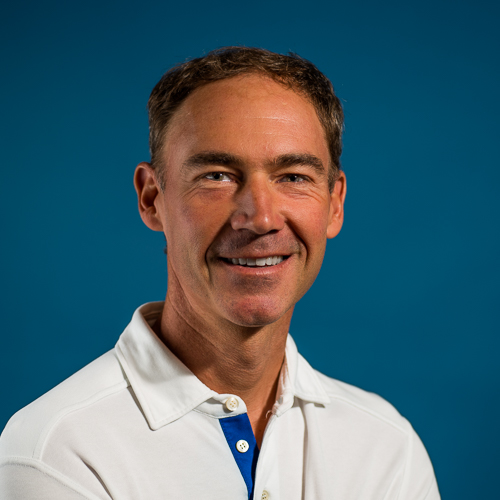
In this interview, Prof. Jan Fehr, Head of Department and Head of the Center for Travel Medicine, shares his key takeaways, discusses challenges, and outlines the opportunities that may arise from the Trialogue Days for the future.
You have just returned from the Trialogue Days in India. How would you describe your overall impression, and what has stayed with you most?
What impressed me most was the diversity of the participants — people from a wide range of professional and cultural backgrounds. It was more than just a meeting; it was a true coming together, a genuine trialogue between the three regions. I would like to quote Andrew Kambugu here: “Deep listening” — truly listening — made it possible to take in different perspectives, engage in exciting discussions, and learn from one another. This opened up new ways of looking at existing challenges and laid the groundwork for innovative solutions.
Another key aspect was the atmosphere of trust, which made these Trialogue Days so special. The participants were connected not only by a shared topic, but also by the way we interacted with one another. The format played an important role in this. We planned the event over one and a half years and deliberately designed it to include many natural touch points, as we called them — whether cycling together to the venue or taking part in activities outside the conference rooms. These informal encounters greatly encouraged exchange, which was an important aspect.
One moment that was particularly striking was during the closing round, when someone spoke openly about their own biases. The realization that all of us carry certain assumptions — consciously or unconsciously — was moving. It showed me that real trust had been built, making it possible for people to reflect on themselves honestly and critically. Precisely these kinds of open conversations are essential if we want to step beyond our comfort zones and find new paths toward solutions.
The Trialogue Days were held under the theme “Mind the Gap.” Where do you personally see the biggest gaps that need to be closed?
Wherever people from different backgrounds come together and exchange perspectives, gaps become visible. That is exactly the first step: naming them so that they can then be addressed in a targeted way. We can analyze many things — but if no action follows, we have not really gained anything. This became particularly clear to me during an impressive talk by Suzanne Suggs.
She showed how essential the humanities and social sciences are when it comes to translating scientific findings into society. Social sciences, marketing, behavioral psychology — all these disciplines play a key role if we truly want to take “One Health” or “Planetary Health” seriously.
Here at the University of Zurich, we have a decisive advantage: as a comprehensive university, we bring together expertise from a wide range of disciplines. If we work interdisciplinarily and use these resources strategically, we can develop innovative and implementable solutions. However, another major gap also became clear during the discussions: we are a privileged community, a tiny fraction of the world’s population that is able to participate in this academic discourse.
If we want to bring about real change, we need to think beyond science and include those who are confronted with practical challenges every day — such as farmers who have to secure their livelihoods. A visit to a chicken farm illustrated this very clearly. Of course, it would be ideal to avoid antibiotics, but for many farms, this means lower income. There I met a father who wants to provide his children with an education. His reality is different from our academic debate — and these are precisely the perspectives we need to understand if we want to develop sustainable solutions.
Was there a particular speaker, talk, or discussion that especially inspired you?
There were many inspiring talks and discussions, but I found the interactive conversations particularly impressive. We had input presentations from four to five experts, followed by discussions with the audience. What I found most interesting was observing how the participants began to develop a shared language — for example by adopting new concepts such as “deep listening,” as mentioned earlier.
One talk that particularly stayed with me was given by a nephrologist from Delhi. She spoke about a new kidney disease whose cause has not yet been fully clarified, but which is thought to be linked to climate change and heat — a highly relevant and fascinating topic.
I am also repeatedly impressed by Harriet Mayanja. With remarkable groundedness and common sense, she manages to make even complex issues understandable and tangible.
The Travel Clinic is part of the Department of Public & Global Health at the University of Zurich. How does the concept of Global Health differ from Planetary Health and One Health?
These three terms have evolved historically and overlap in many ways.One Health is the oldest of the three and originally comes from veterinary medicine, shaped in particular by Calvin Schwabe. The approach emphasizes the close connection between human, animal, and environmental health.
As the climate crisis became increasingly important, environmental and climate factors moved more strongly into focus. In 2014, Horton et al. published a Planetary Health Manifesto in The Lancet, which established the term “planetary health.” Planetary Health goes beyond One Health by placing even greater emphasis on the interactions between human health, ecological systems, and global changes such as climate change.
Global Health, in turn, connects many of these aspects but also places a particular focus on justice — especially along the North-South and West-East axes. It is about recognizing and addressing global inequalities in health, often in direct connection with the consequences of climate change.

More important than strict definitions, however, is the shared systems-based approach. What matters is recognizing and making use of synergies. One example: anyone vaccinating people against rabies in a remote village in Chad should also think about the dogs, since controlling the disease in animals is often the most effective way to protect people. This interconnected way of thinking — systems thinking — is essential for finding sustainable solutions.
Discussions around climate change and planetary health are often dominated by a bleak vision of the future. Was that also the case at the conference?
I found it encouraging that the conference addressed not only the challenges of climate change, but also the opportunities that arise from them. The organizers placed importance on fostering a perspective that goes beyond simply focusing on problems. It is about thinking beyond the Anthropocene — beyond a world shaped primarily by humans for their own benefit — and recognizing that we must respect planetary boundaries in order to secure a livable future in the long term. Key terms here include climate change, CO2 emissions, and greenhouse gases.
One example that particularly stayed with me was brought into the discussion by Bernadette Nirmal Kumar: migration is often perceived as a threat, yet it holds enormous potential. Our societies have always benefited from cultural exchange — whether in our food culture or in infrastructure, such as the straightening of the Rhine, which would hardly have been possible without the support of Italian workers.
To actively shape change, we need a new mindset. Hope is essential in this regard, because without positive visions of the future, we lack the motivation to get up in the morning and work on solutions. This hopeful narrative was deliberately encouraged at the conference.
ow is the concept of planetary health connected to our work at the clinic? And is there anything you would now change in your work as Head of the Travel Clinic?
If we look back a few years: when I started here in 2017, the department was still called “Public Health.” But through the intensive exchange I maintained, including with Uganda — also as a mandate from the Faculty of Medicine at the University of Zurich — it quickly became clear to me that a department with a focus on travel medicine needs to be positioned more broadly. That is why the expansion to “Public & Global Health” was a logical step. Global Health also means global responsibility — and this is playing an increasingly important role in our work at the Travel Clinic.
In concrete terms, this means, on the one hand, that we want to place greater emphasis on the concept of responsible traveling. How can we raise travelers’ awareness of sustainable travel — both with regard to the environment and to the people at the destination? Tourism is an essential source of income for many countries. Travelers should therefore be aware of where their money goes: Does it actually support the local population, or does it end up in a European bank account?
On the other hand, we want to advocate even more strongly for a group that is often overlooked: so-called VFRs, or “visiting friends and relatives.” These are people who do not travel for leisure, but who have had to leave their country of origin due to economic or political pressures. For them, we want to further develop the Center for Travel Medicine as a reliable point of contact. This aspect of global responsibility is becoming increasingly important in our work.
What practical advice would you give travelers in particular to help promote planetary health?
First of all, it is worth consciously asking yourself: What do I hope to get out of this trip? What longings do I associate with it? And what is the price — not only financially, but also ecologically and socially? We all know the situation: the weather is gray, everyday life is stressful, and suddenly a trip is booked — somewhere warm. But often we do not really know where we will end up or what impact our trip will have on the destination.
The first step toward responsible traveling is therefore conscious planning. It means informing yourself well about the destination and asking: Does what I experience there truly match my expectations? Does my money actually benefit the local population? Are people on the ground paid fairly? Are resources handled responsibly? And above all: Would we do the same at home, or are we simply benefiting from a system that causes long-term harm?
A central point is to understand yourself as a guest — with respect for the culture, the people, and nature. Travel should not be a one-way street where we simply allow ourselves to be pampered and then fly home without thinking about the consequences. It is about creating experiences that not only enrich us personally, but also leave a positive footprint.
Ultimately, we take home from every journey not only sunshine, but hopefully also a deeper warmth in our hearts — a connection to the people and places that welcomed us.
Trialogue Days 2026Trialogue Days 2026 will take place in Zurich from August 30 to September 3. Click here for more information! |