



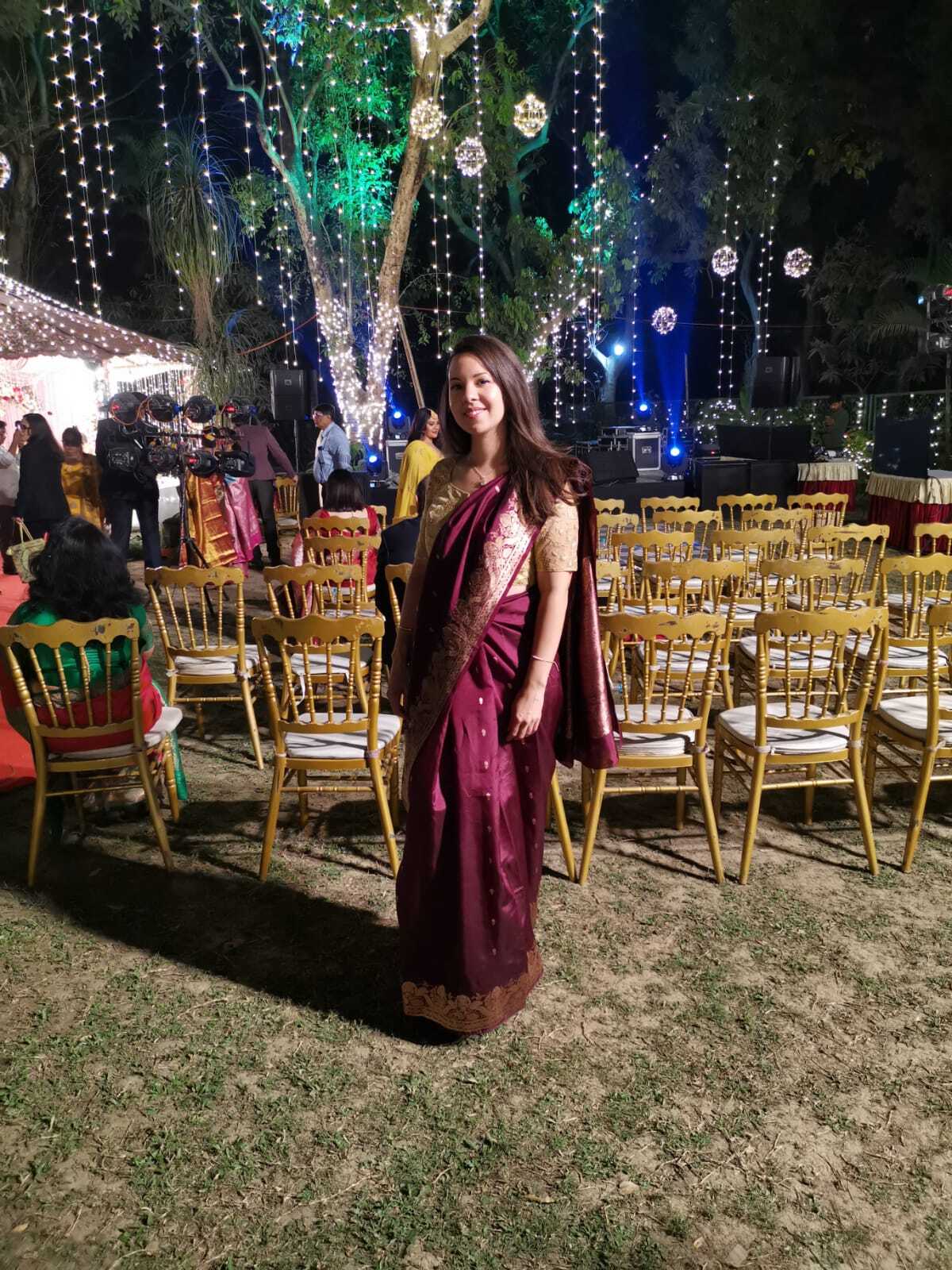

For several years, the Department of Public and Global Health at the University of Zurich, which also includes the ZRM, has maintained a collaboration with KPC Medical College and Hospital in Kolkata, India. One of the aims of this partnership is to promote professional exchange and to develop joint programmes to improve infection prevention and control, including an aim to reduce antimicrobial resistance.
Becoming a tropical medicine specialist
As part of her training, Natalie is spending six months at KPC Medical College and Hospital in Kolkata. She is the first physician from the ZRM in the field of tropical medicine to work in Kolkata as part of this collaboration. There she is involved in the daily clinical routine in internal medicine, rotates regularly through dermatology, and also contributes to scientific work on antimicrobial resistance.
This placement abroad is a fixed part of specialist training in tropical medicine. It offers the opportunity to encounter diseases and healthcare systems that differ significantly from everyday clinical practice in Switzerland.
Given the collaboration between the ZRM and KPC, a stay in Kolkata was a natural fit. For Natalie, however, India is only one stage of her broader training journey. After a short stop back in Switzerland, she will continue on to Thailand together with her partner, where she will complete the Diploma in Tropical Medicine and Hygiene (DTM&H) at the School of Tropical Medicine in Bangkok at Mahidol University. “A real dream is coming true for me there.”
Between ward rounds, case discussions and research
At KPC Medical College and Hospital, Natalie is fully integrated into the clinical routine. Her main focus is internal medicine, complemented by regular exposure to dermatology. Her daily work includes ward rounds, case discussions, and active involvement in clinical care. In the afternoons, she is involved in projects in microbiology and pharmacology, while the evenings are often dedicated to continuing education through the Continuous Medical Education programme.
This combination of clinical work, teaching, and research makes her stay in Kolkata particularly special. At the same time, this period is shaped not only by work, but also by personal impressions, newly formed friendships, and experiences beyond the clinical setting.
Kolkata and Zurich: two very different clinical worlds
Asked how everyday work at KPC differs from hospital life in Switzerland, Natalie laughs: “I could write a book about that. Where should I start?”
One key difference lies in the resources available per patient and in the organisational processes. Formality is often also quite different: “I brought my white coat for nothing. Doctors often work in everyday clothes.” Discussions about treatment with patients and their relatives also differ markedly from those in Switzerland. The medically optimal treatment is not always the main priority; often, the focus is on what is financially feasible for the patient.
Another difference is the workload. While a six-day work week is standard at KPC, Natalie also describes the work as less hectic: “From a doctor’s perspective, you work much more and for much longer, but in a much more relaxed way. There is no rush, even a resuscitation is carried out calmly. And the doctors are available 24/7.”
She also notices major differences in teaching and training. Resident doctors are expected to have a great deal of theoretical knowledge, sometimes in very fine detail. During case presentations, all clinical examination techniques are reviewed and discussed in depth, almost like being back at medical school. “That is definitely different for us,” Natalie says. “In Switzerland, teaching and learning are much more patient-centred.”
Language, too, adds another layer of challenge to everyday work. Natalie speaks of a “double language barrier”: “At first, having to use exclusively English medical terminology in daily life, combined with the Indian accent, was challenging.” In her case, one could almost speak of a triple language barrier: alongside English, Bengali also plays an important role in daily life. Natalie has meanwhile acquired some basic Bengali as well: “Local people are incredibly pleased and appreciative when they hear me express myself in their language. It often instantly brings a smile to their faces and creates a connection right away.”
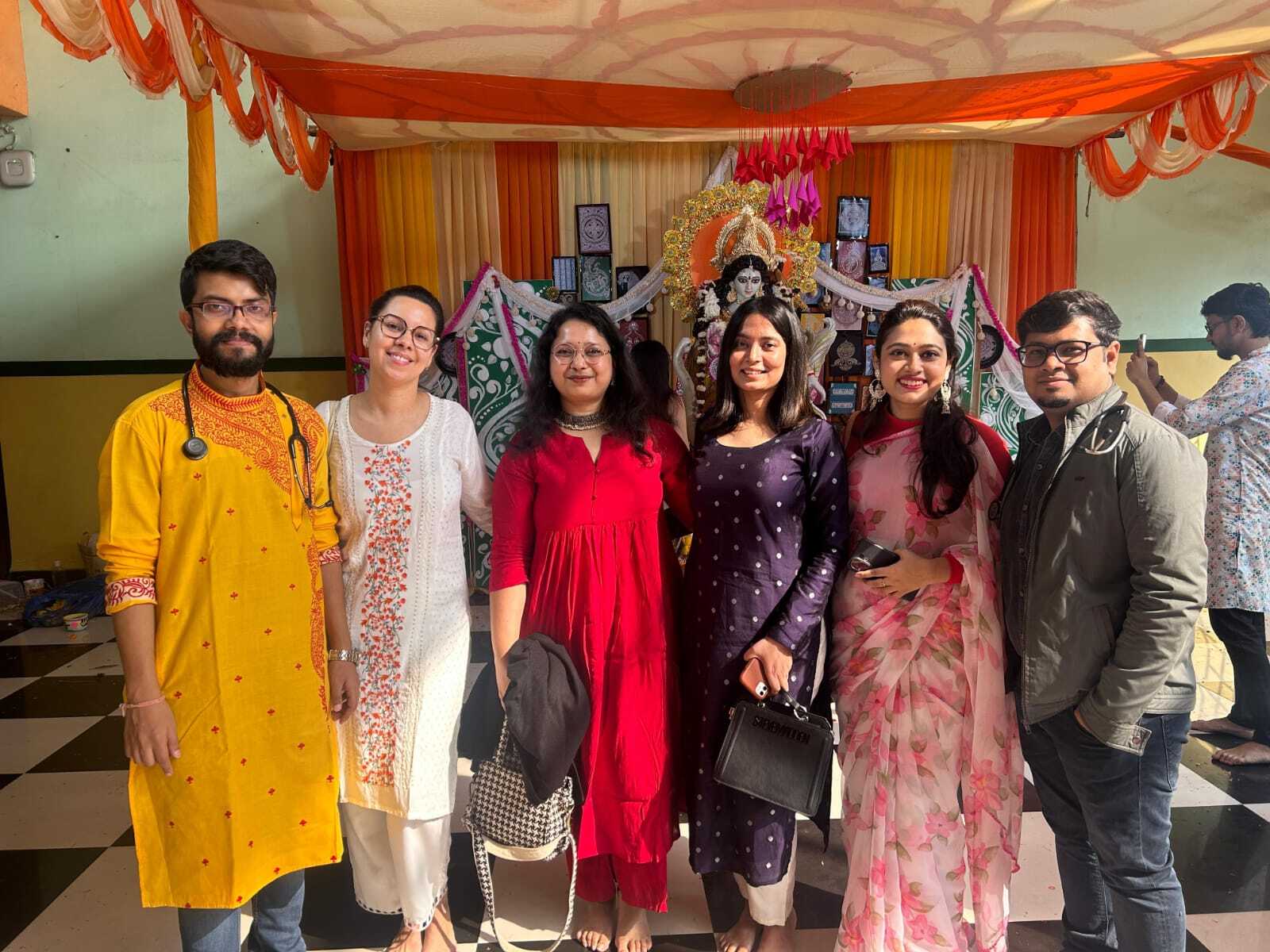
Resident doctors from KPC at KPC, at a celebration of the goddess of wisdom, Saraswati Puja
A focus on antimicrobial resistance
In addition to her clinical work, Natalie is also involved in scientific activities. She is supporting a retrospective study led by Prof. Dr Hugo Sax, which investigates the prevalence of antimicrobial resistance in the KPC intensive care unit.
Her stay is therefore not only a valuable clinical experience, but also part of a broader scientific exchange between Zurich and Kolkata.
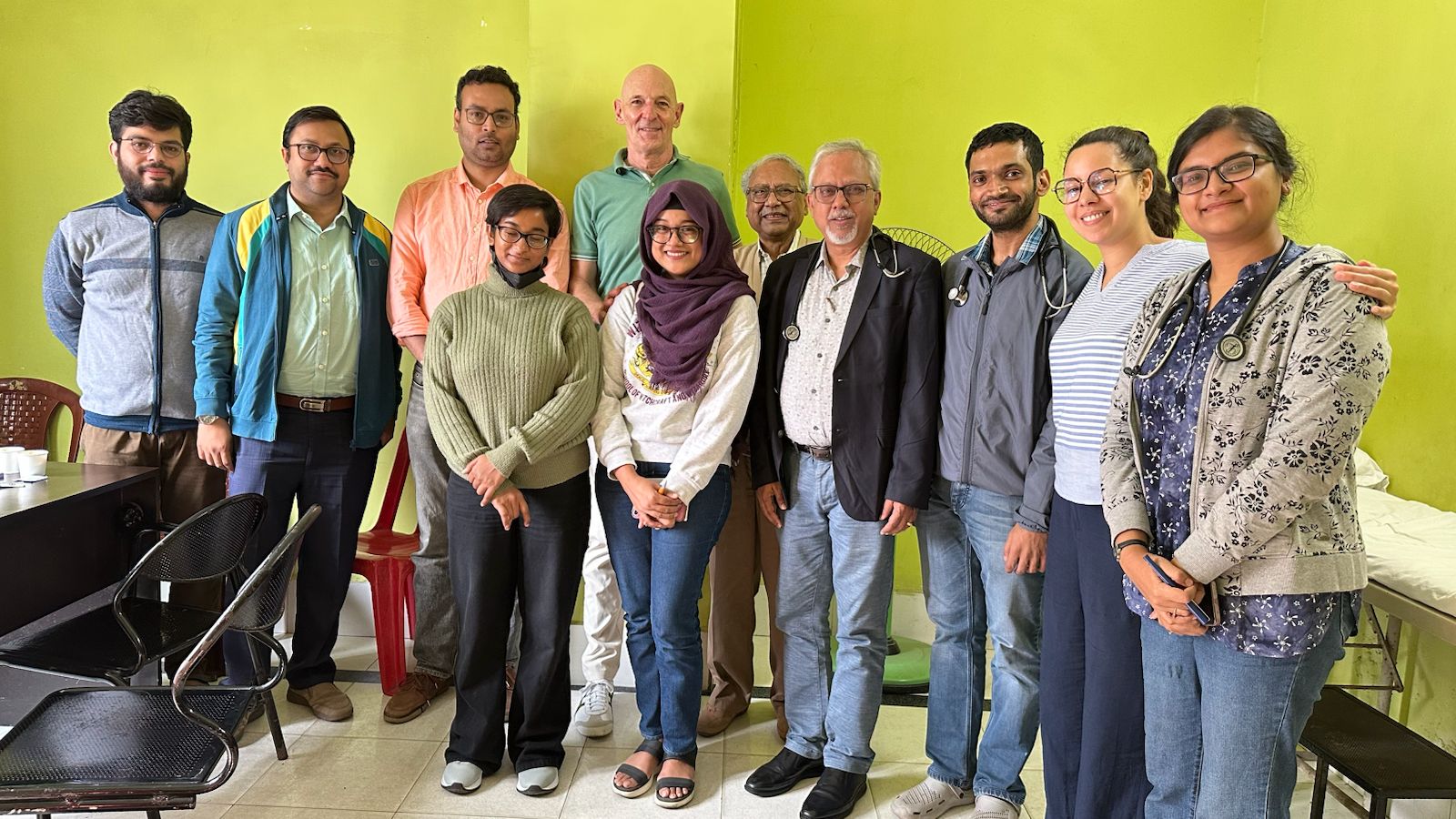
On KPC Internal Medicine Ward 6 (Unit 6) with Hugo Sax (back row, fourth from the left).
One week at the Institute of Tropical Medicine
In addition to her work at KPC, Natalie is also spending time at the Institute of Tropical Medicine in Kolkata. “Besides the many internal medicine cases I have encountered so far, I hope to also see some exciting tropical medicine cases,” she says. She is particularly looking forward to exchanging ideas with colleagues who share her passion for infectious diseases and tropical medicine.
A piece of Latin America in Kolkata
Natalie finds an important balance to her working life in her long-standing passion for dance. In Kolkata, she has found her way into the local salsa scene: “I have been dancing Latin partner dances for over 15 years, especially salsa and bachata. Luckily, there is a fantastic salsa community in Kolkata that I joined.”


-1.png?width=1200&length=1200&name=Copy%20of%20Beige%20White%20Minimalist%20Pattern%20Page%20Border%20Document%20(A4%20Landscape)-1.png)

More than just a professional assignment
As enriching as her stay in Kolkata has been, it has also brought challenges. For Natalie, this is her first time in India. What she found especially challenging was the experience of encountering herself anew in a foreign culture marked by great and at times difficult-to-grasp contrasts. Alongside the medical impressions, the unfamiliar cultural environment was particularly formative.
She was especially affected by cases in which no further medical treatment was possible for financial reasons. Experiences like these are humbling and broaden one’s perspective on medicine, healthcare systems, and global inequalities.
Natalie therefore advises other doctors planning a similar placement abroad to bring clinical experience with them if possible. In addition, she says that an open attitude towards new and unfamiliar circumstances, as well as a certain amount of patience, is a great advantage. It also helps to deal with unexpected situations as calmly as possible and not to become discouraged by challenges.
Experiences for the future
After returning to Zurich, Natalie would very much like to continue the collaboration with KPC and the School of Tropical Medicine, especially through regular case discussions. She hopes that her placement can contribute to a long-term professional exchange.
“I think we can learn a great deal from one another.”